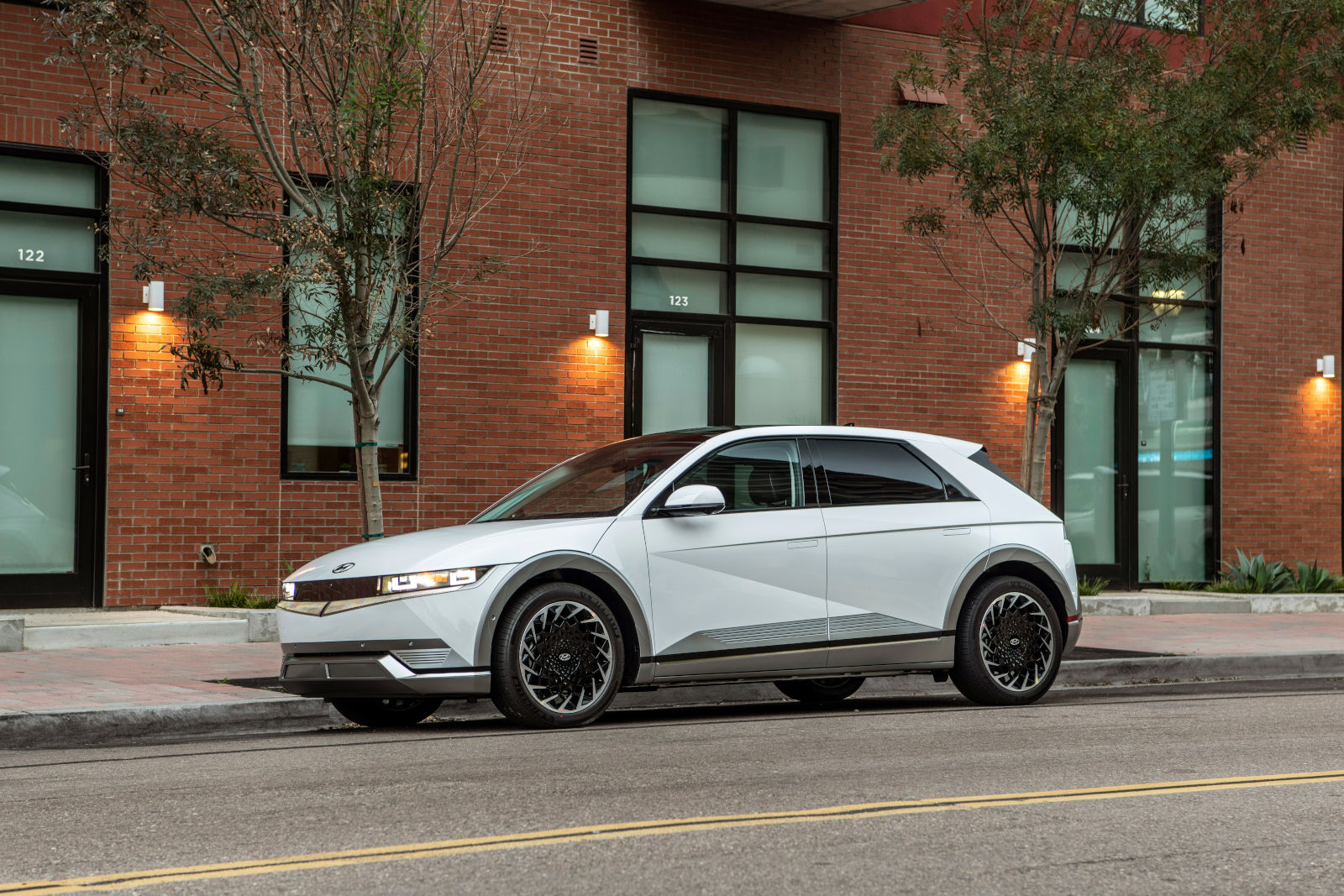
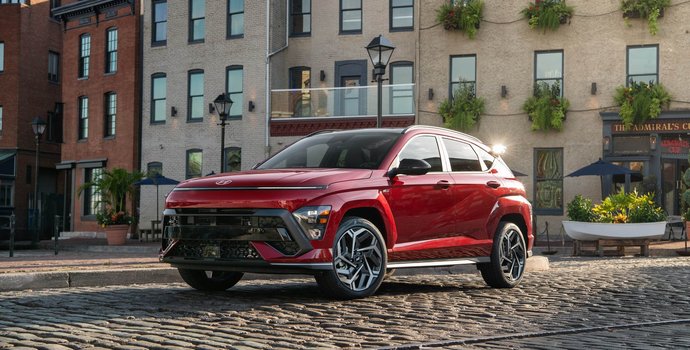
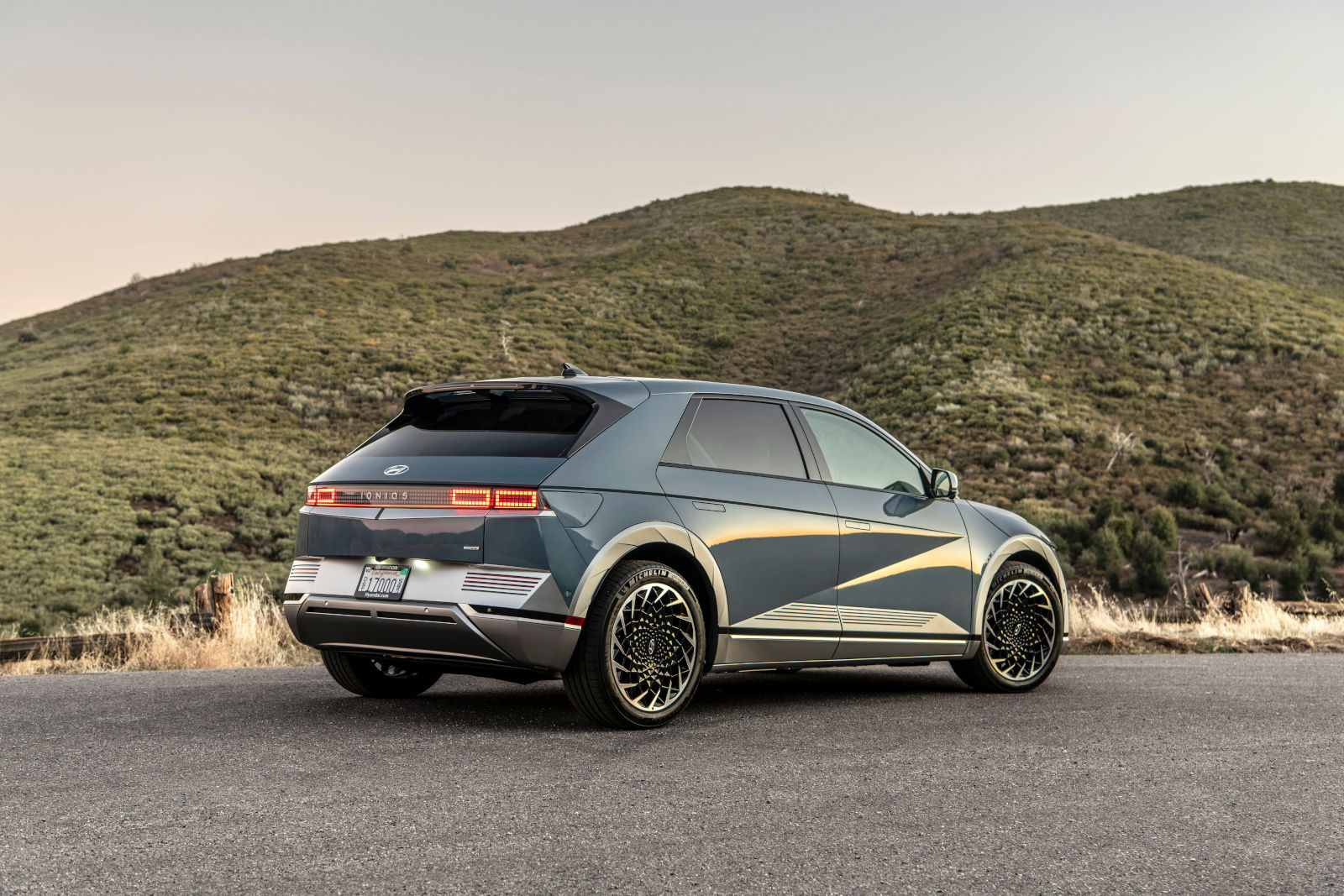
In the rapidly evolving landscape of electric vehicles (EVs), the 2024 Hyundai Ioniq 5 and the 2024 Hyundai Kona Electric stand out as two of the most popular options available to consumers in Mississauga. Each brings its unique blend of innovation, design, and technology, promising to redefine the electric driving experience. Both are modern in their design, particular this year after the Kona Electric’s comprehensive redesign for 2024, and both offer state-of-the-art EV powertrains and technology. In this article, we dive deep into a side-by-side comparison of the 2024 Hyundai Ioniq 5 and the 2024 Hyundai Kona Electric, evaluating their performance, design, technology, and features, to help potential buyers make an informed decision about which Hyundai electric vehicle is right for them.
Range, Performance, and Charging: 2024 Hyundai Ioniq 5 vs. 2024 Hyundai Kona Electric
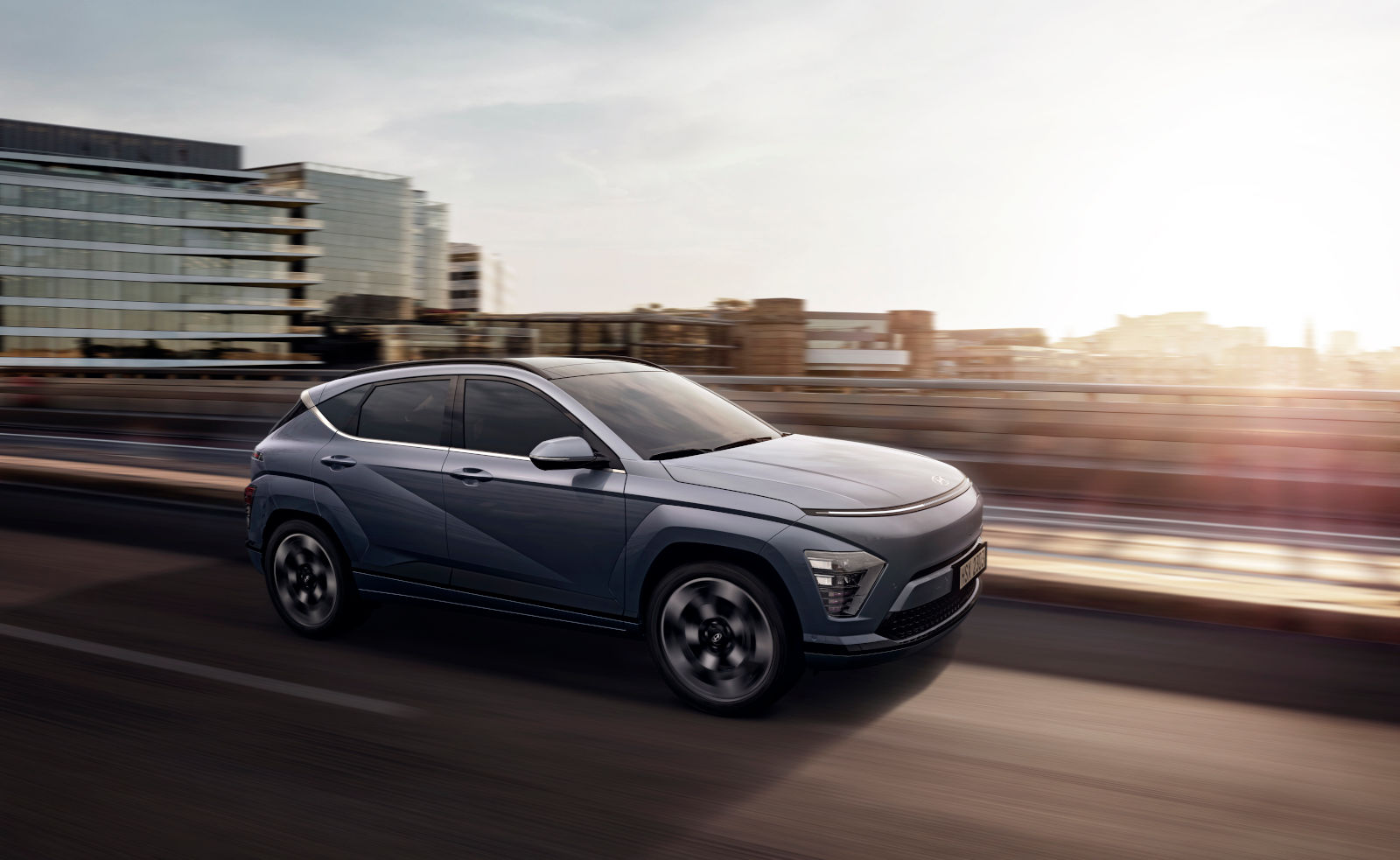
When it comes to electric vehicles, three key factors often determine consumer choice: driving range, performance, and charging capabilities. The 2024 Hyundai Ioniq 5 and the 2024 Hyundai Kona Electric are both remarkable in these aspects, but they offer different experiences. Let's compare these two models in terms of their range, performance, and charging features.
Driving Range and Battery
The 2024 Hyundai Ioniq 5 boasts an impressive driving range with its 77.4 kWh battery, offering up to 488 kilometres on a full charge. This extensive range is ideal for long journeys and reduces the need for frequent stops to recharge.
In contrast, the 2024 Hyundai Kona Electric is equipped with a 64.8 kWh high-voltage battery and promises a range of 420 kilometres on a full charge. While slightly less than the Ioniq 5, it still provides ample distance for most daily needs and longer trips. The Kona Electric also delivers more range than the vast majority of its rivals.
Performance and Handling in Winter Conditions
Both vehicles are well-suited for challenging winter conditions. The Ioniq 5 features an available Snow mode, which adjusts traction for optimal grip, improving handling in both packed and deep snow. Moreover, the Ioniq 5 can be equipped with all-wheel drive, a feature not offered in the new Kona Electric. On the other hand, the Kona Electric, with its low centre of gravity and multiple traction and stability control systems, is more than capable of facing difficult winter conditions.
Charging Efficiency
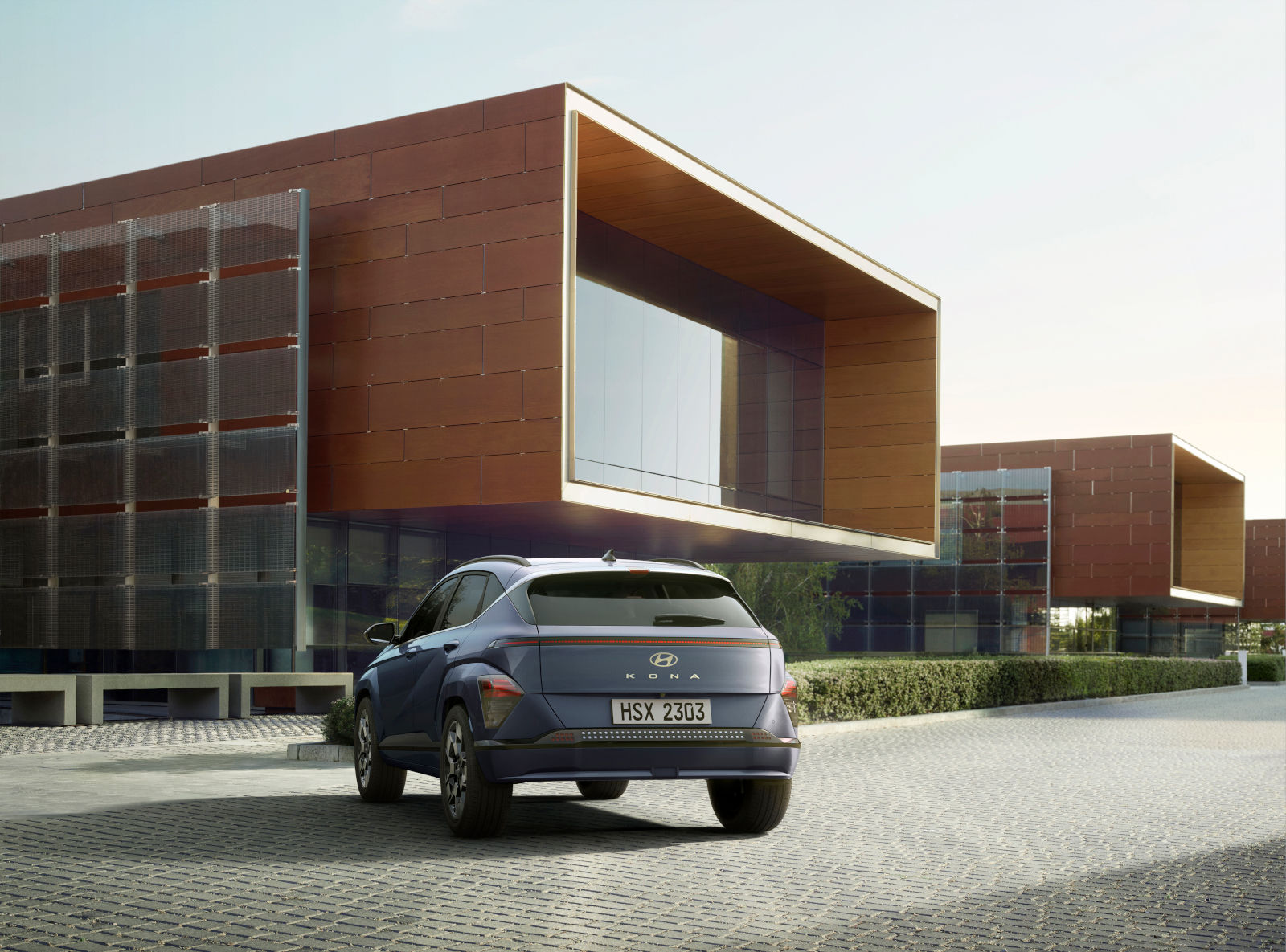
Charging time is crucial for EV owners. The Ioniq 5 shines in this area with its ultra-fast charging capability. Using a 350 kW DC ultra-rapid charger, it can charge from 10% to 80% in just 18 minutes, and a quick 5-minute charge can provide over 100 km of range.
The Kona Electric also charges efficiently, reaching 80% charge in approximately 45 minutes. While this is longer than the Ioniq 5, it still represents a quick turnaround and among its direct rivals, the Kona Electric is among the quickest models when it comes to charging the battery.
Heat Pump System and Battery Temperature Management
Both models are equipped with a Heat Pump System and a Battery Temperature Management System, crucial for maintaining performance in cold weather. These systems help in reducing the loss of electric driving range in colder temperatures. For the Kona Electric, even the charging port door is heated to prevent freezing, ensuring ease of use in winter.
Interior Space Comparison of the 2024 Hyundai Ioniq 5 and the 2024 Hyundai Kona Electric
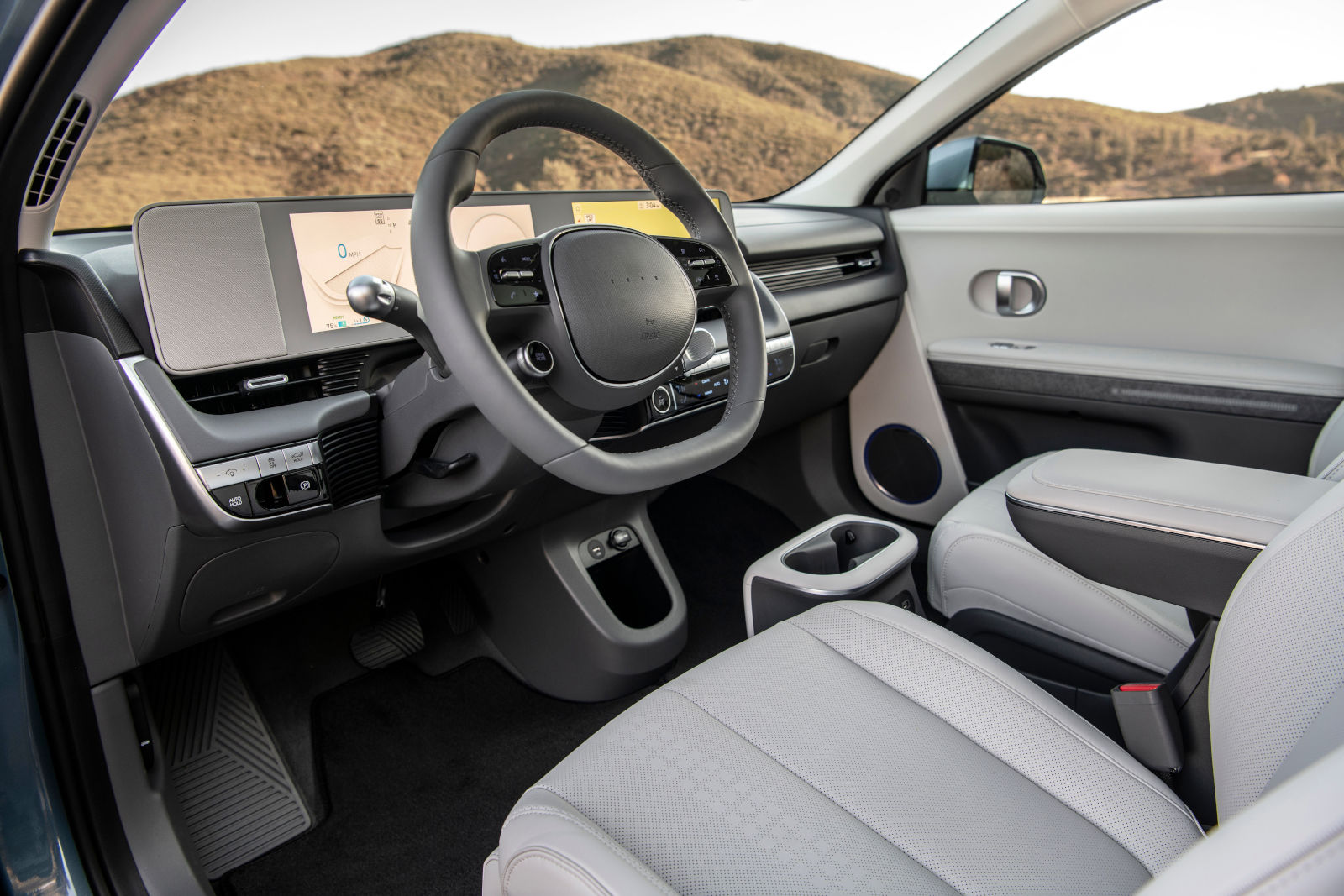
When considering the interior space of the 2024 Hyundai Ioniq 5 and the 2024 Hyundai Kona Electric, it's clear that both vehicles cater to different needs in terms of comfort and utility, each with its own unique advantages.
Cargo Capacity
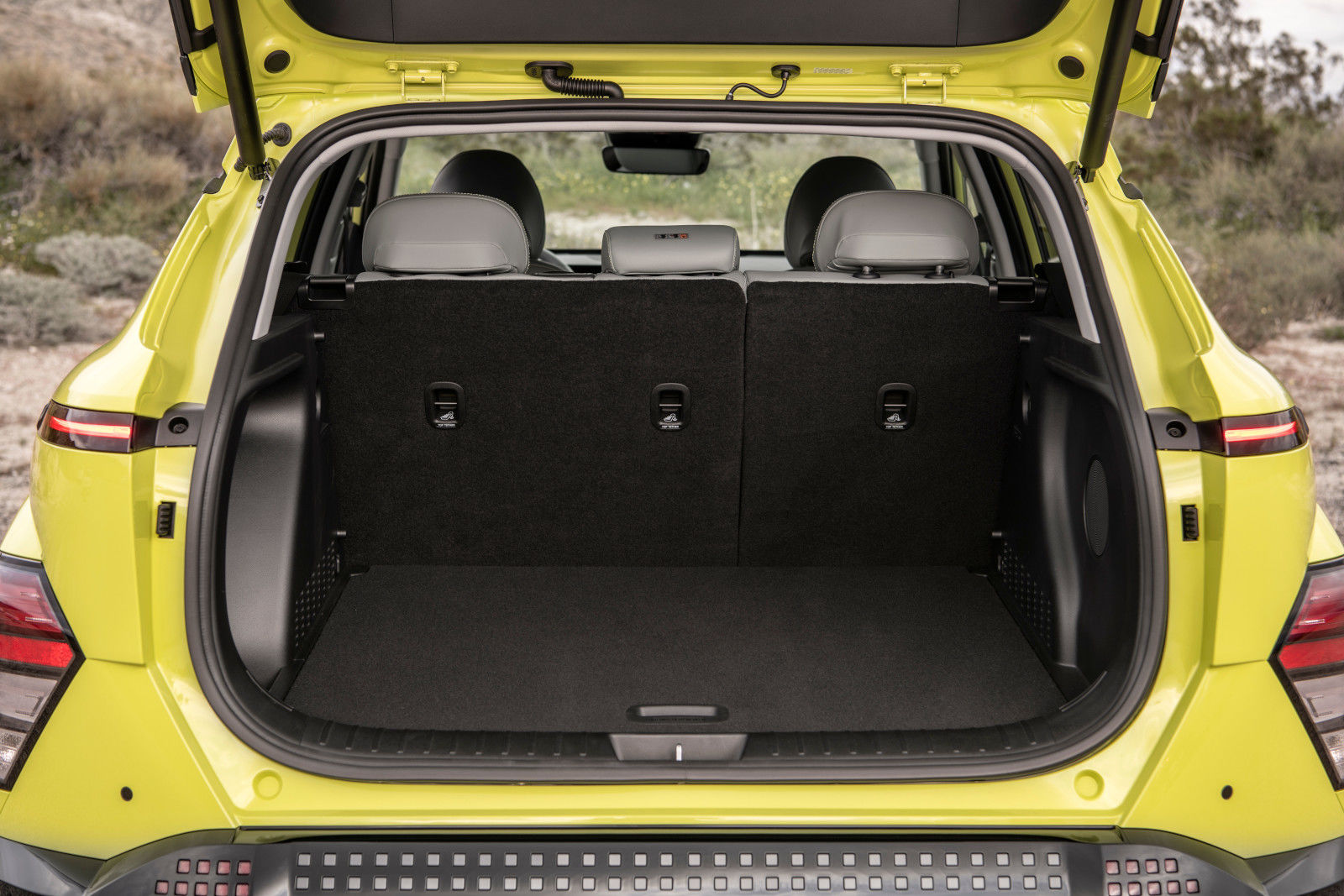
Starting with cargo capacity, the Kona Electric presents a practical layout, offering a respectable 723 litres of space when the rear seats are up, which expands to an impressive 1,803 litres once the seats are folded down. This makes it suitable for a variety of uses, from daily commuting to accommodating larger items for road trips or outdoor activities. On the other hand, the Ioniq 5 slightly edges out with a cargo capacity of 770 litres behind the rear seats, and 1,680 litres with the seats down, along with an additional 24-litre frunk. This extra front storage space can be particularly handy for smaller items, enhancing the vehicle's overall utility.
Interior Space and Passenger Volume
In terms of passenger comfort, headroom is an important consideration, especially for taller occupants. The Kona Electric offers ample space with 1,015 mm in the front row and 972 mm in the rear, which should be adequate for most users. The Ioniq 5, however, goes a step further by providing even more headroom - 1,046 mm in the front (or 1,034 mm with a sunroof) and 982 mm in the rear (or 953 mm with a sunroof), ensuring extra comfort for all passengers.
Legroom is another critical factor, particularly for long drives. The Kona Electric provides 1,059 mm of legroom in the front and 925 mm in the rear, which is fairly generous. The Ioniq 5, however, excels in this aspect too, offering a more spacious 1,138 mm in the front and 1,002 mm in the rear, making it a better choice for those who prioritize legroom for both front and rear passengers.
Hip and shoulder room also contribute to the overall sense of space within a vehicle. The Kona Electric's interior is designed with 1,378 mm of hip room in the front and 1,330 mm in the rear, alongside 1,435 mm of shoulder room in the front and 1,402 mm in the rear, ensuring a comfortable ride. The Ioniq 5, while slightly more compact in hip room with 1,368 mm in the front and 1,362 mm in the rear, offers more generous shoulder room, measuring 1,465 mm in the front and an impressive 1,470 mm in the rear, which might be more appealing to those who often travel with multiple passengers.
Side-by-Side Space Comparison
|
Feature
|
Hyundai Kona Electric
|
Hyundai Ioniq 5
|
|
Cargo Capacity (Rear Seats Up)
|
723 litres
|
770 litres
|
|
Cargo Capacity (Rear Seats Down)
|
1,803 litres
|
1,680 litres
|
|
Headroom (Front)
|
1,015 mm
|
1,046 mm
|
|
Headroom (Rear)
|
972 mm
|
982 mm
|
|
Legroom (Front)
|
1,059 mm
|
1,138 mm
|
|
Legroom (Rear)
|
925 mm
|
1,002 mm
|
|
Hip Room (Front)
|
1,378 mm
|
1,368 mm
|
|
Hip Room (Rear)
|
1,330 mm
|
1,362 mm
|
|
Shoulder Room (Front)
|
1,435 mm
|
1,465 mm
|
|
Shoulder Room (Rear)
|
1,402 mm
|
1,470 mm
|
In conclusion, when comparing the 2024 Hyundai Ioniq 5 and the Hyundai Kona Electric, it's evident that both vehicles offer a compelling package for those interested in electric vehicles. Both vehicles showcase Hyundai's commitment to electric mobility, each with unique strengths: the Ioniq 5 with its emphasis on innovative features and spacious interior, and the Kona Electric with its practicality and efficient design. Ultimately, the choice between the two will depend on individual preferences regarding space, comfort, and specific features, but you cannot go wrong with either one of these two impressive 2024 Hyundai electric vehicles.
You might also be interested in these blogs: